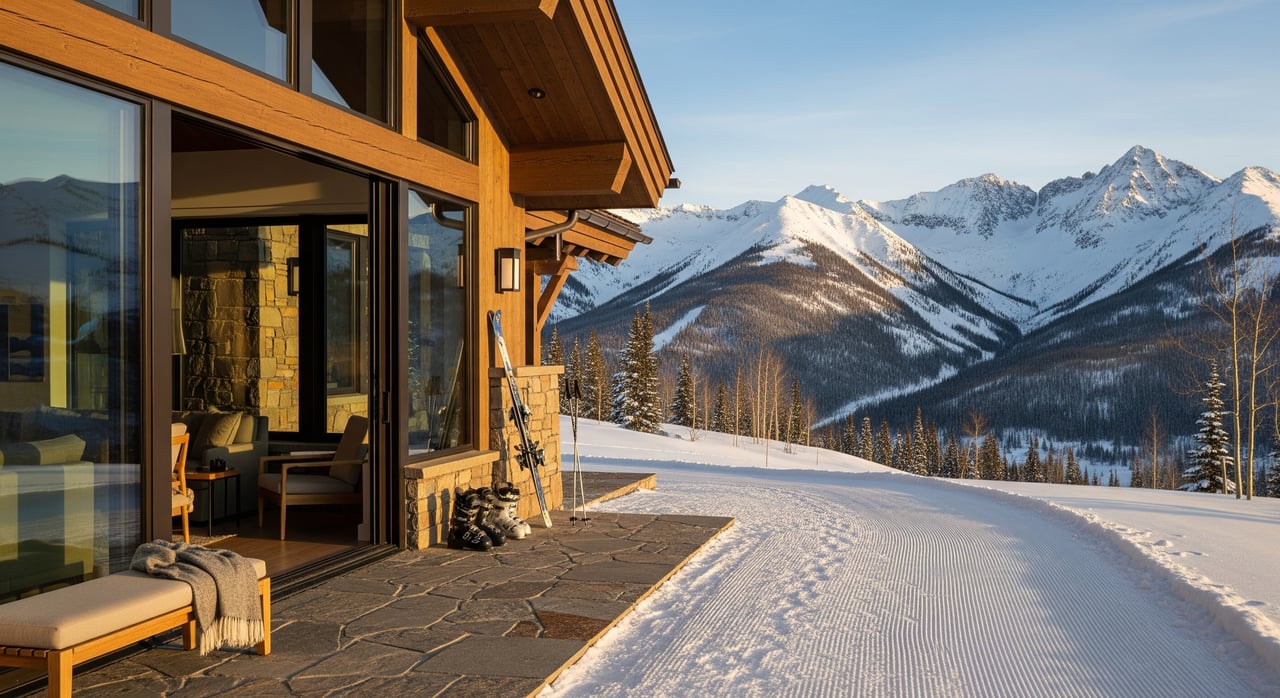
If you have your eye on a Mountain Village home that promises “ski-in/ski-out,” you want that promise to hold up when the snow flies. Convenience is a big part of the lifestyle here, and true on-snow access can define how you use a property, how guests enjoy it, and how it holds value. In this guide, you’ll learn what “ski-in/ski-out” really means in Mountain Village, how local terrain and the gondola shape access, and how to verify a listing’s claim before you buy. Let’s dive in.
What “ski-in/ski-out” really means
“True ski-in/ski-out” is more than being near a lift. It means you can put on your skis at the residence, reach a maintained downhill run or lift, and return on skis, all without using a vehicle.
Key elements to look for:
- Continuous skiable route. You should be able to slide from your door to a groomed run, connector trail, or resort-approved path, and ski back again during the season.
- No vehicle required. Walking a few steps, crossing a plaza, or a short flat traverse may occur, but driving should not be part of the routine.
- Legal access. The route must be on ski-area terrain, a public easement, or an approved private/HOA easement that allows skiing.
- Practicality in normal winter. The route should work reliably, not only during peak snow. Consider grooming patterns and how wind or sun affects connectors.
Anything that requires a longer walk, a shuttle, or only works mid-season often falls into “ski access” rather than true ski-in/ski-out.
Mountain Village layout and what it means for you
Mountain Village sits around 9,500 to 10,000 feet with steep local relief and pockets of varied terrain. That topography, plus the resort’s lift and trail network, creates different levels of access across neighborhoods.
- Trail and lift network. The Telluride Ski Resort trail map dictates where maintained runs intersect the town. Properties that directly border groomed runs which feed into lift terminals or the gondola are the most likely to offer reliable ski-in/ski-out.
- The free gondola. The gondola connecting Telluride and Mountain Village improves convenience but typically requires boarding from a plaza or station, not skiing from your doorstep. A short walk to the gondola is a benefit, yet it is not the same as skiing out your door.
- Terrain and microtopography. Some homes sit just above or below primary runs. That can mean an easy ski down but a walk or short uphill on the return. Landscaping, stairs, or safety setbacks may also interrupt a direct ski line.
- Operations and seasonal variability. Groomed runs are managed for safety and consistency. Ungroomed shortcuts and lower-elevation connectors can be variable early or late season. If a property depends on an ungroomed or unofficial line, expect less predictable access.
- Boundaries and easements. Ski-area permit lines and private property boundaries matter. If the route crosses HOA land or a neighbor’s lot, you will want to confirm an easement or written permission.
Labels you’ll see on listings
You will encounter different access descriptions in Mountain Village. Here is how to read them:
- Ski-in/ski-out. Often used broadly. Confirm that the route is skiable both to and from the residence without a vehicle.
- Direct ski access or ski access. Usually means a short groomed connector or a brief walk in ski boots is required. Ask for clarity on distance and grade.
- Near lifts or near gondola. A walk to the lift or gondola is convenient but not ski-in/ski-out. Good to know for lifestyle, errands, and summer access.
Clear definitions protect your expectations and help you compare properties on equal footing.
Property types and typical access
Different Mountain Village properties offer different probabilities of true ski-in/ski-out. A quick guide:
- Village-core condos and ski-in complexes. Many buildings were designed around the trail network with boot rooms, lockers, and doors close to runs. These often deliver the most reliable direct access.
- Standalone homes and townhomes on runs. If a maintained run, connector, or approved trail reaches the lot line, the home may be truly ski-in/ski-out. Private stairs, decks, or grade breaks can still create short walks.
- Peripheral subdivisions and meadows. These neighborhoods often require a short walk to a connector, a gondola ride, or driving to a lift. Marketing typically frames these as “near lifts” rather than true ski-in/ski-out.
- Ski-country or backcountry adjacency. If a property advertises direct access to non-resort terrain, understand that you are entering uncontrolled, ungroomed areas with variable risk and no avalanche mitigation.
How to verify a ski-access claim
Before you shortlist a property, use a straightforward verification process. Small details make a big difference in daily use and long-term value.
- Confirm the route on official maps. Identify the nearest groomed run or connector on the resort’s trail and lift map. Note the skill level required to reach and return.
- Clarify the exact path from the door. Ask the seller or agent to describe the route step-by-step. Are there stairs, decks, roads, or gates? Is the line groomed or an unofficial shortcut? How reliable is it early and late season?
- Verify legal access. Request deed, plat, or HOA documents that show easements if the route crosses HOA land or a neighboring parcel. Written permissions matter.
- Walk and ski it in winter. Visit during the season and try it with skis on. Look for flat traverses, bootpacks, wind-loaded spots, and any pinch points. Note how easy it is to return with tired legs or with kids carrying gear.
- Check operations and closures. Ask about grooming schedules and any seasonal closures that could interrupt access. Confirm resort policies about skiing to buildings or across rights-of-way.
- Confirm practical amenities. Look for heated storage, boot rooms, and locker access. Clarify who manages snow removal and how guests get from parking or shuttle stops to the door.
A short, clear checklist helps you compare apples to apples and avoid surprises.
Daily living with ski-in/ski-out
Ski-in/ski-out is about more than the morning run. It influences your routines, your guests’ experience, and maintenance needs.
- Boot-room and storage. Convenience peaks when gear storage sits close to the exit you use for skiing. Many condos in Mountain Village have well-organized ski rooms; single-family homes vary by design.
- Errands and movement. You may still use a vehicle or the gondola for groceries, dining, and events. Winter conditions can shape how you plan arrivals and departures.
- Guest logistics. Pay attention to the walk from parking or shuttle drop-off to the front door. Elevators, stairs, and snowbanks change how easy it is for guests to come and go.
- Snow and ice management. HOA buildings typically maintain common areas, while private homes may need contractors for walkways, decks, and driveways. Understand who is responsible and the expected schedule.
- Parking and vehicle access. Even with on-snow access, winter driving and parking remain part of ownership. Steep driveways, snow storage areas, and plowing protocols matter.
- Safety and insurance. Properties near runs can sit close to intersections or safety fencing. Ask about mitigation, historic incidents, and any insurance considerations related to slope proximity.
Value, liquidity, and resale
In resort markets like Mountain Village, true ski-in/ski-out often commands a premium. That premium varies by micro-location, property type, and how usable the access is throughout the season. Buildings purpose-built for skiing with strong operations and amenities tend to be more liquid in peak buying periods, while nuanced inconveniences like required bootpacks or interrupted return routes can temper value.
When you are ready to assess pricing, compare recent, like-kind sales with similar ski access and amenities. Small differences in route reliability, storage, and guest circulation can change both purchase price and long-term desirability.
Shortlist smarter in Mountain Village
If ski access is a top priority, start by defining what “true” means for you and your guests. Decide whether a short walk is acceptable, what skill level is required for the route, and how important early and late season access is to your plans. Then verify everything on the ground with maps, documents, and a winter walkthrough.
When you want a discreet, expert assessment of an address or a curated set of on-snow options, connect with a local advisor who understands Mountain Village’s terrain, easements, and operations. For a confidential, on-the-ground perspective tailored to your goals, reach out to Lars Carlson.
FAQs
What qualifies as true ski-in/ski-out in Mountain Village?
- A property where you can ski from the door to a maintained run or lift and ski back without using a vehicle, with legal, practical access during the typical season.
Is a short walk to the gondola considered ski-in/ski-out?
- Generally no; it is convenient access but is best described as “near gondola” or “walk to gondola,” not ski-in/ski-out.
How do I confirm legal permission to ski a connector?
- Ask for deed, plat, or HOA documents that show an easement, and confirm any needed approvals if the route crosses private or common-area land.
Does an uphill return disqualify ski-in/ski-out status?
- Not always; some uphill sections are normal, but the distance and practicality should be disclosed and tested during a winter visit.
Are there seasonal limits to ski access reliability?
- Yes; early and late season conditions can affect connectors and lower-elevation routes, so verify grooming and closures with the seller and during on-site checks.
What daily features matter most for on-snow living?
- Heated ski storage, a functional boot room near the exit, reliable snow removal, and easy guest circulation from parking or shuttle stops to the door.