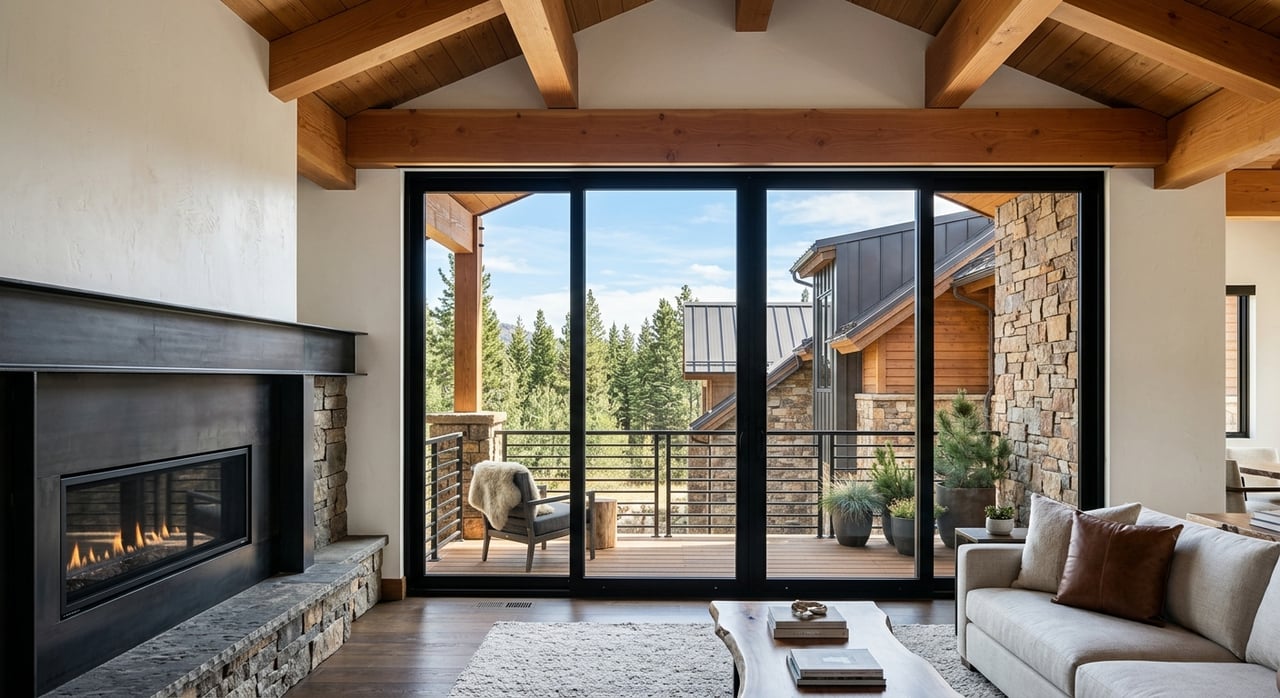
Wondering whether a condo, townhome, or single-family home is the right fit in Telluride? In many markets, the answer starts with property type. In Telluride, it often starts with the exact address, the zoning, and how you plan to use the property. This guide will help you compare each option, understand key local rules, and narrow your search with more confidence — and once you've got a shortlist, a Telluride luxury real estate agent like Lars Carlson can walk through the zoning specifics with you before you write an offer. Let's dive in.
Why Telluride Is Different
Telluride is compact, and that shapes the buying decision in a real way. The downtown core is only 12 blocks long by 8 blocks wide, with Main Street as the shopping and dining center. The free gondola connects Telluride and Mountain Village year-round, and limited parking makes walking, the gondola, and the bus part of everyday life.
That means convenience is not determined by property type alone. A condo can sit one block from Main Street and the gondola, and so can a detached home. If your goal is easy access to skiing, dining, or festivals, the specific location may matter more than whether the property is attached or detached.
Telluride also has a historic core with added review requirements. The National Historic Landmark District has been in place since 1961, and exterior work is more regulated than in a typical subdivision. If you are considering changes to doors, windows, additions, or other exterior elements, the HARC review process is a major part of the decision.
Condo vs Townhome vs Home
What a condo means in Telluride
Under Telluride code, a condominium is a common-interest community with separate ownership of some parts of the property and common ownership of the rest. Owners are also obligated to pay for real estate taxes, insurance premiums, maintenance, or improvements tied to the shared real estate described in the declaration.
In practical terms, condos are often the most association-driven option. They are also commonly the easiest to own as a lock-and-leave property because you are usually buying a unit within a shared structure rather than a fully detached parcel. That can make day-to-day ownership simpler, but it also makes the declaration, budget, and rules especially important.
Current Telluride market data shows a broad range in condo pricing. As of March 31, 2026, median asking prices were about $895,000 for studio and one-bedroom condos, $1.923 million for two-bedroom condos, and $2.3625 million for three-bedroom condos, excluding deed-restricted, commercial, and fractional properties.
What a townhome means in Telluride
Telluride's code defines a townhouse as a one-family dwelling in a row or horizontally attached group. It has its own outside access, no unit above another, fire-resistant common walls, and separate hot-water and heating systems plus separate water and sewer service, unless it is part of a condominium subdivision.
A townhome often sits in the middle. It can feel more house-like than a stacked condo while still being attached and subject to shared rules or structures. If the townhome is part of a common-interest community, the association documents still deserve close review.
For many buyers, a townhome offers a useful balance. You may get more separation, easier access, and a layout that lives more like a house, without taking on all the responsibilities of a detached property.
What a single-family home means in Telluride
Telluride's code defines a one-family dwelling as a detached building containing only one dwelling unit. This is the clearest path if you want a detached property with the greatest level of day-to-day independence.
A single-family home usually offers more privacy, more room for gear and storage, and often more parking flexibility. It may also be the best fit if you want space to spread out for longer stays or multi-generational use.
That said, detached does not mean unrestricted. In Telluride, exterior additions and alterations still require approval, and historic-core properties are subject to HARC review for exterior changes.
How Pricing Shapes the Decision
Budget often narrows the field before lifestyle does. Current Telluride data shows a meaningful gap between condos and detached homes, especially as bedroom count rises.
As of March 31, 2026, median asking prices for detached single-family homes were about $5.1475 million for two- to three-bedroom homes, $8.395 million for four-bedroom homes, and $12.485 million for five-bedroom homes. Redfin's broader Telluride snapshot reported a median home sale price of $4.7 million over the three months ending May 2026.
This does not mean one category is a better value than another. It means your buying strategy should match both your lifestyle goals and your capital plan. In Telluride, paying more for the right location, use rights, and long-term fit can matter more than simply moving up in property type.
How Ownership Costs Compare
Transfer tax matters in Telluride
The Town of Telluride charges a 3% real estate transfer tax on sales of properties within the Town of Telluride and Sunset Ridge. At Telluride price points, this is a significant closing-cost item whether you buy a condo, townhome, or detached home.
Because values can be substantial, transfer tax should be part of your planning early in the process. It is not a minor line item in this market.
Property taxes vary by tax area
For annual property taxes, San Miguel County says the 2025 and 2026 residential assessment rates are 7.05% for schools and 6.25% for other local governments. The county's 2025 abstract lists the Town of Telluride levy at 5.188 mills.
Your actual property tax bill will vary by assessed value, classification, and tax area. That is why it is worth reviewing estimated carrying costs before you commit to a property that otherwise checks every box.
Shared costs can change the math
With condos and some townhomes, shared ownership structure means you should look closely at the declaration and budget. Ongoing obligations may include shared maintenance, insurance, and improvement costs tied to common elements.
A detached home may give you more control, but it also places more direct responsibility on you. Simpler ownership on paper does not always mean lower total cost, and greater autonomy does not always mean easier ownership.
Rental Plans Depend on Zoning
If you may rent the property short term, zoning and licensing are critical. Telluride requires a short-term rental license before advertising or renting, and the license number must appear in ads.
In non-residential zones, a Classic License has no annual night limit. In residential zones, a Residential License is capped at three short-term rentals and three long-term rentals per calendar year, with 29 short-term nights annually.
These rules are especially important because the residential-license limits attach to the property, not the owner, and they do not reset at transfer. The town also states that business licenses cannot be transferred from one owner to another.
Short-term rentals are also taxed at a total of 17.22% under the town's current breakdown. For buyers considering rental flexibility, the real question is usually not condo versus home. It is whether the property's zone, license category, and governing documents support your intended use.
Historic Review Can Affect Renovation Plans
If you love the character of in-town Telluride, be sure to match that excitement with a realistic renovation plan. In the historic district, HARC issues Certificates of Appropriateness before permits for erection, demolition, renovation, restoration, additions, or alterations.
The Planning and Building guidance also states that all exterior changes, including doors and windows, begin with a HARC application. That applies whether you own a condo, townhome, or detached home in the affected area.
This does not make historic property a poor choice. It simply means stewardship and planning are part of ownership. For many buyers, that context is part of what protects the character and long-term value of the setting.
Which Property Type Fits You Best?
Best for a lock-and-leave second home
If your goal is a low-maintenance second home, a condo is often the cleanest fit. The shared-interest structure typically shifts more exterior and common-area responsibility to the association.
A townhome can be the next step up if you want more space or a more private layout without moving fully into detached-home responsibility. In Telluride, though, the best lock-and-leave option is still the one that aligns with your desired location and rental expectations.
Best for a ski base or family use
If privacy, gear storage, parking, and room to spread out are the top priorities, a single-family home often comes out ahead. It tends to offer the strongest separation and the most flexibility for longer stays.
A townhome is often the compromise choice. It may give you a more house-like experience while keeping some ownership responsibilities more contained than a fully detached home.
Best for full-time or long stays
For a long-term residence, the right answer depends on how you balance autonomy and simplicity. Detached homes offer the most independence, while condos and townhomes usually simplify certain aspects of ownership.
If you expect to make exterior changes, the review process matters. If you want to arrive and enjoy Telluride with fewer moving parts, attached property may be the better match.
Five Things to Verify Before You Choose
Before you decide between a condo, townhome, or home in Telluride, verify these five items:
- Whether the property is in a Residential Zone or Non-Residential Zone
- Whether the HOA or declaration allows your intended rental use
- How the transfer tax and annual property taxes affect your total carrying cost
- Whether planned exterior changes will trigger HARC review
- How much parking and storage you actually need for the way you live here
In a market as specific as Telluride, those details can matter more than the label on the listing. A well-located condo may outperform a larger home for your goals, while a detached property may justify its premium if privacy and flexibility are central to the way you use it.
Choosing well here takes more than comparing square footage or bedroom count. It takes a clear understanding of location, ownership structure, regulations, and long-term fit. If you want a measured, local perspective on which property type makes the most sense for your plans, Lars Carlson can help you evaluate the options with discretion and clarity.
FAQs
What is the main difference between a condo and a townhome in Telluride?
- A condo is typically part of a common-interest community with shared ownership of common areas, while a townhome is a one-family dwelling with its own outside access and no unit above another, though it may still be part of a condominium subdivision.
How do short-term rental rules affect Telluride property choices?
- Short-term rental rights depend more on zoning and license category than on whether a property is a condo, townhome, or detached home.
Are detached homes in Telluride easier to remodel than condos?
- Not necessarily. Detached homes still require approval for exterior additions and alterations, and properties in the historic core are subject to HARC review.
Is a condo usually the best lock-and-leave option in Telluride?
- Often yes, because the shared-interest structure usually shifts more exterior and common-area responsibility to the association.
What extra costs should buyers expect in Telluride real estate?
- Buyers should account for the 3% real estate transfer tax in the Town of Telluride and Sunset Ridge, annual property taxes, and for condos or some townhomes, shared ownership costs tied to common elements.
Does location matter more than property type in Telluride?
- In many cases, yes. Telluride's compact layout means the exact address, access to Main Street and the gondola, zoning, and parking can matter as much as the property category.